
 Design Engineering & Craft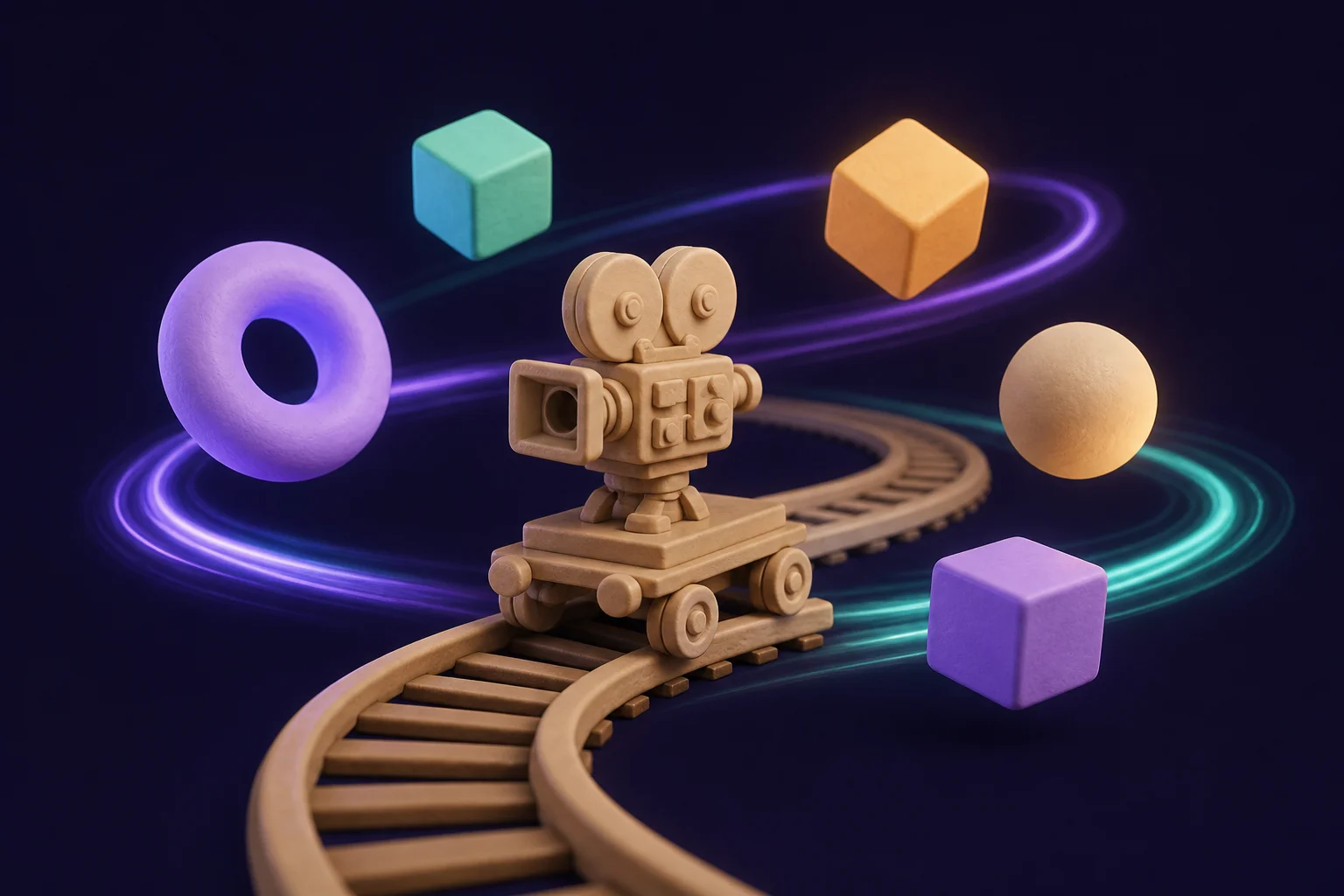
The landing page you arrived through on this site is one continuous camera flight: five miniature worlds, one glide, no cuts. It is not a gimmick — it is a thesis. Motion, used with intent, is the most underused material in product design.
Most interfaces treat motion as garnish: a fade here, a bounce there. Film treats motion as grammar. Cameras establish, focus, and transition — and audiences read those moves fluently without being taught. We can borrow that fluency.
The three camera moves of UI
Almost every meaningful interface animation maps to one of three film moves:
- The establishing shot. When a user lands somewhere new, give them geography before detail. A dashboard that fades in as one composition — then resolves into its widgets — is legible. One where twelve cards pop in randomly is noise.
- The push-in. Focus is a zoom, not a highlight. When a user opens a record from a table, the record should feel like a closer view of the same world, not a teleport to a different app.
- The match cut. Transitions carry identity. The thumbnail that grows into the detail view tells the user "this is the same object." That continuity is worth more than any breadcrumb.
Easing is emotion
Linear motion feels mechanical; extreme spring physics feel like a toy. The craft is in choosing an easing curve that matches your product's temperament. My rule of thumb: business tools ease out fast and settle quietly. Creative tools can afford a little overshoot. Nothing in a professional product should wobble.
Scroll as a timeline
Scroll-driven storytelling — the technique behind this site's flight — works because it hands the user the playhead. They control time, so motion never feels imposed. Three principles keep it honest:
- Scrubbing must be instant. If the visual lags the wheel, the illusion collapses.
- Seams must be invisible. Every transition point has to be frame-matched, or the world feels stitched.
- Reverse must work. Users scroll up. Your story has to play backwards as gracefully as forwards.
The performance budget
Cinematic UX dies the moment it costs frames. Every motion feature ships with a budget: no layout thrash, transforms and opacity only, and an escape hatch — under reduced-motion preferences the film becomes stills, and the story still reads.
That last point matters most. Motion should be a layer on top of meaning, never the carrier of it. If your interface stops making sense with animations off, you did not design motion — you designed dependency.
Cinema spent a century learning how to move a camera. Product design gets to inherit all of it, for free. We should.